

On Wednesday I turned 49. One of the fun things about being born on New Year’s Eve is that the next day I can already say that I will be 50 this year. Because my birthday sits in the middle of a break from work, this part of the year is always very reflective for me.
When I turned 40, I was surprised that I had a bit more of a mid-life ‘wobble’ than I thought I would. I distinctly remember walking to my office, pondering where I was and what I wanted to do with the rest of my career. I started looking for a new job, which ultimately ended up with me becoming a contractor 18 months later, working for a client that is now my employer.
Over the past few weeks I’ve found myself in this same place of reflection, a year earlier than when it hit me last time. I’ve got 27 years of my working life behind me and — if I stay healthy and retire at 67 — 18 years ahead, which makes it feel more important that I spend my remaining time well.
Catching up with podcasts and reading over the Christmas break has got me thinking about what I should do with my career. I consider myself a technologist, but my career took an early turn into systems analysis and project management, and I am now a generalist technology manager CIO-type person.
(As an aside, I’ve always struggled with what my specialism is, which makes it very difficult to have a snappy way to present myself. I’ve watched with envy and admiration as my friend Lisa Riemers introduces herself as “usually the techiest person in a comms team, or the commsiest person in a tech team”, which is a superb description. The best I can come up with is a fumbly explanation of being “a generalist technology manager, with a background in managing large programmes and projects”, which feels as though it falls short of what I can do.)
Is managing teams of technologists how I should focus my remaining time? Or should I instead be looking at getting back into the technology, which ultimately was my first love? Simon Willison’s end-of-year summary of 2025 in large language models is an excellent read, and got me wondering whether the future of people working in technology departments will be those that can do all of the soft skills stuff, plus work with coding agent tools such as Claude Code to quickly create prototypes and applications? A ‘full stack IT manager’ who can bring code to the table, perhaps. Is exploring this a safer bet to keep myself employable until I retire, or should I continue my generalist, managerial focus?
I’m still thinking about Steve Kamb’s post on The Glass Cannon Strategy that I linked to a couple of weeks ago. In it, he transcribed Ben Thompson’s advice from an episode of the Sharp Tech podcast:
People are so hyper aware of what they’re bad at.
They spend so much time trying to get better at what they’re bad at.
You will never [receive outsized returns this way].
Figure out a series of hacks, systems, put yourself in a position where your weaknesses don’t matter…
and what matters is your strengths… so that you become so unique and powerful that companies will hire a hundred people to take care of everything you’re bad at.
They don’t want you wasting your time on what you’re bad at, they want you doing what you’re great at.”
I’ve never been completely convinced that what I’ve proven myself to be good at (managing programmes, working with teams of people) is what I love doing. Every time I sit down to write, I find myself loving the process. Making connections with people across the Internet has been a passion of mine for thirty years. The geek in me looks longingly at people who work with code all day. I don’t know whether diving into LLM coding is the best use of my time. The last time I was doing any serious coding, we worked with raw text files in a text editor and a basic source control tool, way before Git and GitHub were invented. Is it even feasible to dive into the world of integrated development environments (IDEs) for any useful outcome if I’m snatching an hour here and there? I’m sure I’m overthinking it. Maybe a little dabbling would be good.
What I do know is that I want to learn more until I’m happy that I have a good working knowledge of how stuff works. In a recent Stratechery update, Ben Thompson talks about Amazon’s announcement of Nova Forge, a large language model offering that allows you, the customer, to incorporate your own data into the model training:
Right now you have two ways to incorporate your company’s data into an AI model: first, you can use RAG to basically have a model search your company’s data in the context of providing an answer. Second, you can post-train a model on your company’s data. The shortcoming in both approaches is that your company’s data isn’t actually in the model, which can lead to unsatisfying results.
Nova Forge is an offering built on AWS’s internally produced AI models; because they own the Nova models, they own the training checkpoints. What you can do with Nova Forge is choose a checkpoint — say, when the model is 80% trained — and infuse your company’s data at that point, so that the data is integrated into the model itself, and not simply searched or trained-in after-the-fact.
I think this is a really compelling offering, even if Nova is fairly middling as a model. After all, what is more useful: an OK model that actually knows your company, or a leading-edge model that is hacking around the edges to give relevant answers?
I understand this conceptually at a high level, but it isn’t enough for me. What does “80% trained” mean? What 80%? And why is that better than training the model 100% and then extending the training with your own data? (Does that make it a new 100%?) I don’t know where I can go to get into the weeds on this without getting mired and lost in too much technical detail, but I want to learn.
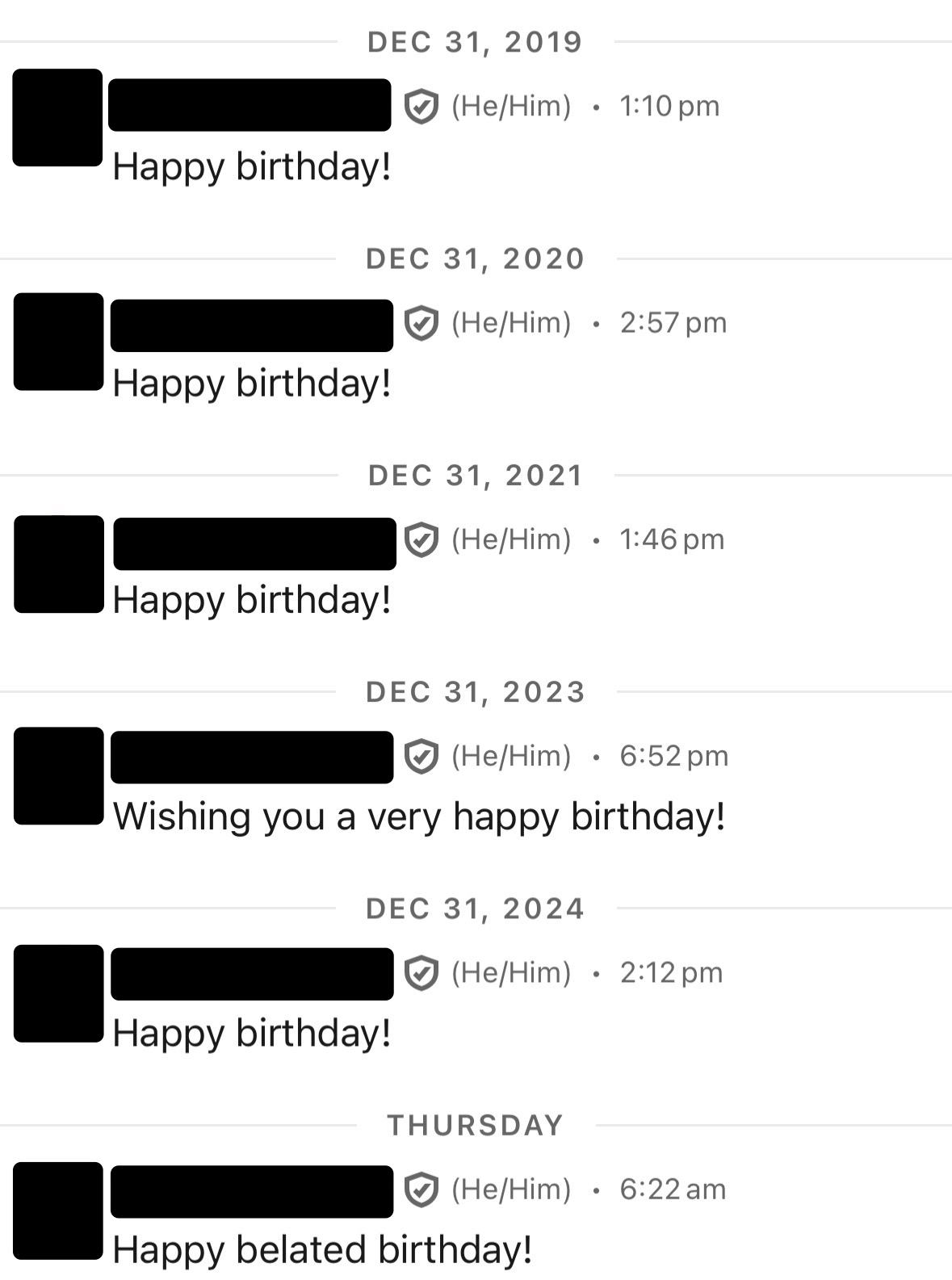
I’m not big on New Year resolutions, but I have been thinking about trying to get back into the habit of messaging old friends to say hello. (Although I will try and avoid turning into one of the small collection of LinkedIn connections that message me every year on my birthday. Do they do this for everyone? It must be exhausting.) I’m also going to try and answer the phone to people I know the first time they call instead of letting it ring out and calling back at a time that’s slightly more convenient to me.
Aside from pondering my life as I approach my half century, this was a week in which I:
- Spent some bike-related time with our youngest son. Early in the week I was about to leap on the indoor trainer but he suggested we go out. He did great, tackling a 65km ride and opting to climb Tom’s Hill right at the end. The only blot on the ride was three ridiculously close passes in a row by some dreadful drivers that had me fuming. The weather turned too cold and icy for any more outdoor cycling, but we reset a very old iPad and installed TrainerRoad so that he can attempt a structured training plan. Watching him do his first ramp test was a proud moment.
- Went for a 10km run with our eldest boy, the same day that I’d been out cycling with the youngest. It was fun, and great to be out running with him again. But at this point, I started to have my suspicions that they had colluded and were attempting to hasten my demise.
- Took a couple of trips to the indoor running track at Lee Valley with our eldest. Both times, the ratio of travelling to running time seemed way out of kilter, but it was great to have an excuse to spend some time with him.

- Found it challenging that the daylight hours are so short. As soon as you’ve done any activity, it seems as though the sun is going down.
- Had fun talking to Evan Schwartz, the software engineer behind Scour. He got in contact after reading my recent post on tools for discovering the IndieWeb. I love giving feedback on products and getting on board with other people’s ideas. We had a great discussion, and before the day was out he had already implemented one of the features that I suggested. It’s a really interesting tool to play with and I’ve been discovering some great blog posts through using it.
- Found out that in order to claim on the house insurance, there needs to have been a specific ‘event’ and not just wear and tear. I got in contact with our insurer to find out about the process of claiming for our recent roof leak, given that we’ll need re-roofing and redecorating to repair the damage. The very helpful representative told me that they use some specific weather databases to find out if there was a storm around the time that we think the problem started. If there was no storm, we can’t claim.
- Hand-washed the car with an actual bucket and sponge. We’ve had our current car for over five years and I’m not sure that I’ve ever washed it before. After numerous complaints on the dashboard that the cameras needed cleaning I thought it was about time I did it.
- Took advantage of the dry weather to finally vacuum up most of the fallen leaves in our back garden. I managed to fill up an entire bulk bag before running out of daylight. The next day we had a light dusting of snow, which hasn’t thawed yet, so the remaining vacuuming will have to wait.
- Enjoyed listening to Massive Attack’s Protection at the WB-40 Album Club. I don’t think I’d heard it since the 1990s. I found out that Plex on Sonos automatically searches across all libraries that you have access to, which is seemingly the only place that I use Plex where it does this. (I’d love this functionality to appear in PlexAmp.) I streamed the album from a friend and it sounded great.
- Got an impromptu invite to a friend’s New Year’s Eve party at their house a couple of streets away. Our children are now at the age where they want to spend NYE with their friends, but until they have fully locked-in plans it’s difficult for us to decide what we’re doing. Walking two minutes to a proper old-school house party was just what we needed. They are amazing hosts and we had a great time. I don’t drink very much, so I left around 1am as the party started to move into overdrive. Apparently it didn’t finish until 4am, which would be enough to give me a hangover without having touched a drop.
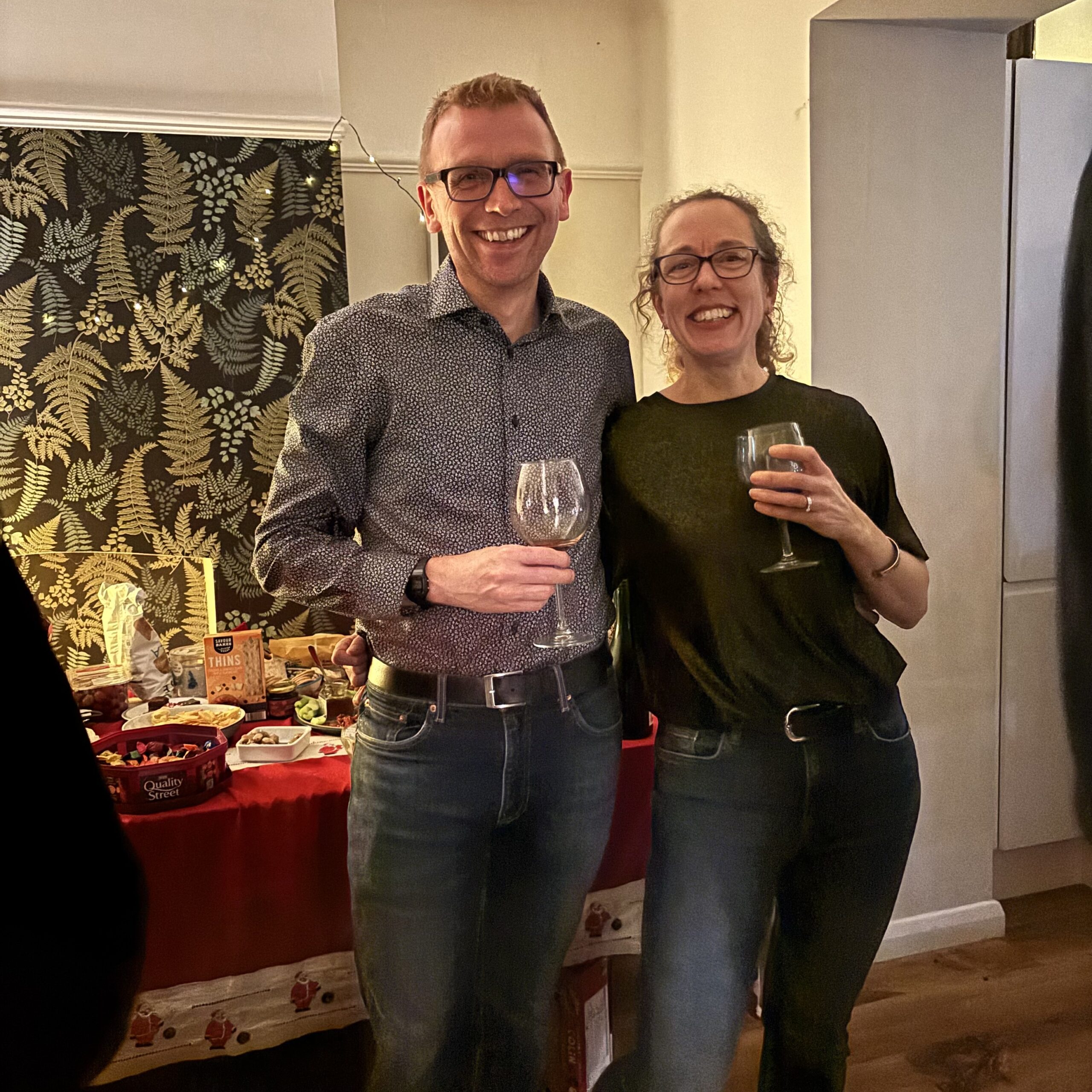
- Went back to the same friend’s house a couple of days later for our in-person Album Club. We listened to Lost Souls, the first album by Doves. They are a band with a fascinating history, who in 1993 as Sub Sub scored a hit with Ain’t No Love (Ain’t No Use). I first heard them as Doves on Come On Try Young a cover CD compilation that was given away with the NME in 2000. At some point I think I ripped a friend’s copy of Lost Souls into my iTunes library, but I don’t remember ever sitting down to listen to the whole thing. It was wonderful to do that this week.
- Went for a belated birthday dinner on New Year’s Day at Pluma in Amersham. The food was excellent, but it is one of those places where you miss out quite a lot through not eating meat.
- Went on the indoor bike trainer almost every day, as it is too cold to ride outside. I came across this video of cyclists coming off on black ice when the temperature was 5°C. This once happened to me on a mountain bike, so I’m happy not to risk it.
- Went to a friend’s 40th birthday party at a pub in Taplow. People had come from far and wide to be there, including Zimbabwe, Botswana and South Africa. He and his wife always have such an interesting group of friends at their events and it was great to meet some more of them.

Media
Podcasts
- I’ve been trying to catch up with my podcast backlog over Christmas but so far have only made it to mid-December. Pocket Casts now tells me that I exited last year with 1,801 podcast episodes listened to. I’m not sure if that’s a thing to be proud of.
- Ethan Mollick and Molly Kinder, guests on a recent episode of Your Undivided Attention on the topic of AI and the Future of Work, posed some useful questions. What do agile software development practices, such as a two-week sprint, look like when a software developer is many times more productive due to having an AI coding assistant? What does a daily standup meeting look like? The tools may be steering us into a world which is not optimal or equitable for workers. Who really gains from the upside of AI? They note that AI benchmarks are weird in that they try to measure whether an AI is better than a human; wouldn’t it be better to benchmark how much better the AI can make a human?
- Sharp Tech tackled an interesting listener question whose family discussions around the Thanksgiving family dinner table had a big anti-technology slant to them. The listener wanted some advice as to how to push back when these topics come up, defending technology in a hopeful way. Technological shifts can be difficult for individuals, but the benefits to society — and the whole world — have been immense. Ben Thompson pointed to the world shown through the works of Charles Dickens and asked whether people would really rather return to that. He also said that “I like to point to the agricultural revolution. 98% of people used to work in agriculture and today 2% do.” I think the number is off from a global perspective, but the point is well made.
- Really enjoyed Manton Reece’s appearance on the Software Defined Interviews podcast. His micro.blog platform is directly responsible for making me think differently about my site, and its philosophy gave me the mental permission I needed to write and post more. This week he posted on his site that “The call to action is clear. Get a domain name and start writing. Short posts, long posts. It’s okay if you haven’t figured everything out yet. With time it’ll all come together.”
- Arthur Snell’s conversation with former MP and author Bob Seely on the Russia-Ukraine conflict is terrifying.
Bob Seely: So we need to understand how to develop hard power in the new era. Fundamentally, that means understanding drone warfare and the fundamental changes in doctrine that are being caused by drones, by mass of drones, by automation of drones, swarms linked by AI and artificial learning … we have to keep a much closer eye on our internet cables and energy supply cables, because I suspect the Russians have probably already planted devices on them to be able to blow them up and destroy them.
British and NATO generals who say, fundamentally, doctrine hasn’t really changed are talking nonsense. One or two of them do say that. Quite a few of them now don’t. And unless we learn pretty quickly, we are going to be in a world of pain.
Unless you have an answer to the problem, what happens on day one of a physical — a traditional war, for want of a better term — in, let’s say, the Baltic Republics, when you have at 6am in the morning, at D hour plus 30 seconds, you have 10,000 fibre-optic linked suicide drones come at your bases … unless you have a phenomenally good response to that, you are going to be in a world of pain. And right now, there is absolutely no response. Just to say we have 300 big sexy missiles that cost a million quid each and can do some damage, great. They may not survive Russian electronic warfare, and you will run out of them by the afternoon on the second day of the war.
- The conversation did float some good ideas about raising awareness amongst the public about where we are:
Arthur Snell: it feels to me as if society really has a very shallow grasp on the seriousness of what is facing us and the degree of change that’s needed. How do we tackle that?
Bob Seely: I think you need an informed population, which is what we don’t have at the moment. When the government says we need to prepare for war, but is not actually spending anything else on defence, it is very difficult to argue that the government believes its own message … I think what you need is to educate the population. And I would say there are two things immediately that one can do.
You need an annual statement of threat. So the British state needs to produce, maybe under the guise of a respected parliamentary committee, which will take evidence from MI5, MI6, GCHQ, other people within government, that you have a serious look of threats that are emanating from other countries. Whether those threats are military, whether they’re economic, whether they’re informational, you know, the whole gauntlet of threat in order to counter the total war or the forms of, you know, total integrated hybrid, call it what you will, warfare of our potential adversaries. So we need a respected part of our institutions and our establishment in the UK to actually produce something of worth that will educate and help inform people separate from the work being done by government.
I would secondarily also have a statement of economic dependency where, again, a respected committee, which is free of government influence, will produce a statement to understand the threats, the economic threats specifically, and specifically the over-dependence on any specific countries, i.e. China, in our supply chains.
Articles
- Veteran news reporter John Simpson has written a sober summary of 2025.
- The Polymarket website came to my attention through a couple of routes this week. It’s a website that allows you to bet on pretty much anything, including notable world events. 404 Media have a write-up of how an ‘unauthorised’ edit to the front line of the Russia-Ukraine conflict led to a payout. Dare Obesanjo pointed to someone turning USD 32k into USD 436k by betting on Maduro being overthrown in Venezuela. Polymarket exists because of course it does. However, it’s jarring and hideous to see people make bets about conflicts, and it does make you think that as soon as there is money at stake, there is an incentive to bring that thing about in order for the bet to pay out.

- Rob Skinner has a lovely reflective post on his year of long-distance cycling.
- Dominik Hofer writes about “A more social IndieWeb”. I do feel that the rise of Facebook and Twitter directly correlated with a reduction in how many people comment on blog posts.
- Dries Buytaert’s blog has turned 20 years old. I love this paragraph in his post, which relates to the conversation I had with Evan Schwartz about Scour earlier in the week:
Blogging starts conversations with people I have never met. Blog posts become invitations that never expire. They wait patiently for the right moment to be found. Someone reads an old post, reaches out, and suddenly we are talking. Even in person, conversations start more easily because people already have a sense of who I am or what I care about.
- Rachel Coldicutt makes a good point about the rise of “the acadamisation of AI” whereas in actual fact, at a basic level, it isn’t that complicated. “The idea that AI provides some kind of mystical, over-intellectualised sekrit answer to all the world’s problems is primarily a great way of extracting cash from people with too much money.”
- Simon Willison’s summary of 2025 in the world of large language models is a typically superb read.
Video
- It was lovely to watch the final episodes of Stranger Things together as a family. Doing stuff like this together is so rare these days. I didn’t read anyone else’s review of the ending but I personally loved it, and am not ashamed to say that I shed a tear.
- No Hard Feelings (2023) is a pretty poor film, like a large language model’s attempt at a romantic comedy. The ingredients were there, but it failed. The two main characters didn’t do anything of note together and yet we were expected to believe that they developed a caring relationship. A much better movie along the same lines is Can’t Buy Me Love (1987), which has always made me feel like I’m in an underground club of people who have seen it and love it.
- We finished the first season of Pluribus. The ending was…fine? There are so many directions that the show can go in. I’m sure we’ll tune into the next season when it comes along.
- We had a family trip to the cinema to see Marty Supreme (2025). The acting was great, but about halfway through I found myself getting annoyed at such a super unlikeable lead role. The eponymous Marty reminded me a little of Joe Lampton, the central character of John Braine’s ‘angry young man’ novel Room at the Top, but with much less depth of feeling.
- A few days later we watched Beautiful Boy (2018), turning this into Timothée Chalamet week. It’s a hard watch, but beautifully acted. I loved the soundtrack, but the music ended up being a bit of a distraction from the story.
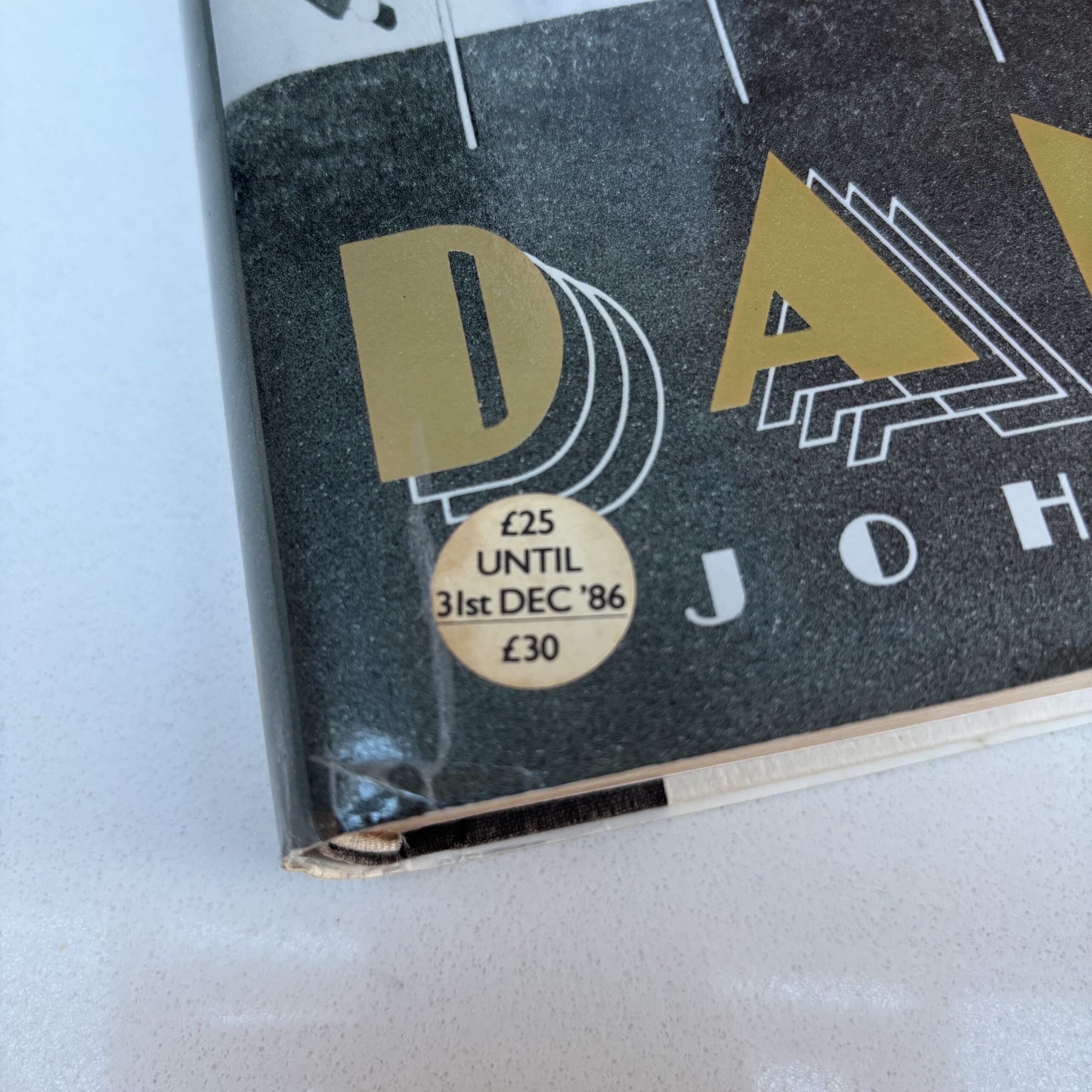
- I restarted my project to re-watch all of Fred Astaire’s musical films, accompanied by the big book by John Mueller that dissects each of them. Shall We Dance (1937) suffers from an extraordinarily weak storyline, but the Gershwin soundtrack and some of the dance sequences are great. The end of They All Laughed is particularly spectacular. Next up is A Damsel in Distress (1937) which I’ve ordered on DVD.
- The BBC’s Christmas Hits: The Videos That Sleighed worked for a low-energy hour. It felt as though it was cheap to make, with interstitial title cards filled with information instead of a narrator. I had no idea that Elton John and Ed Sheeran had teamed up to create a Christmas song in 2021. It’s dreadful, which is probably why it passed me by.
Audio
- Andrew at Parlogram has a good video on Why We Don’t Listen To Our Box Sets. I’m definitely guilty of buying more than enjoying. My music purchasing has slowed down recently as I really need to listen more to what I’ve already bought. I do long for those days where I could spend a couple of hours in my room, listening to a CD a couple of times as I read every word of the inlay, with hardly a care in the world.
Books
- Started reading Humankind: A Hopeful History by Rutger Bregman, a book that my wife bought me for Christmas.
Next week: Wishing our eldest son bon voyage as he heads back to the US, and getting back to work.
A belated thank you for the mention, Andrew!