

After a long weekend, this ended up being a three-day working week followed by a short break with my family. We have a lot going on this summer, with both A-Level and GCSE results, our youngest making the pilgrimage to Reading Festival, and our eldest looking to get a visa and make a move to the US for university college. Conscious that there may not be many more holidays that we’ll all spend together, we were keen to get away, so we started looking for a destination for a short break. Lisbon seemed to be exactly what we were looking for. We found some cheap flights and a centrally located hotel, and we were on our way. It didn’t disappoint.
We flew from London Luton to Lisbon (not easy to say quickly), zipped through the airport and took an Uber to our hotel. Everything was seamless from the moment we landed. The airport is conveniently located close to the city, but far enough away that the planes don’t trouble you when you’re there.

We stayed at Brown’s Central Hotel, which turned out to be a perfect spot in the centre of the city. We wanted something centrally located and it’s literally in the name. The hotel is situated on a corner within the small grid system of avenues and streets that were established when Lisbon was rebuilt following the devastating earthquake of 1755. From here we could wander around the grid, passing the incredible number of restaurants with their street dining areas, head east or west into the historic, hilly sections with winding passages and stairs, or south through the Rua Augusta Arch, into the Praça do Comércio , down to the riverfront and the port.
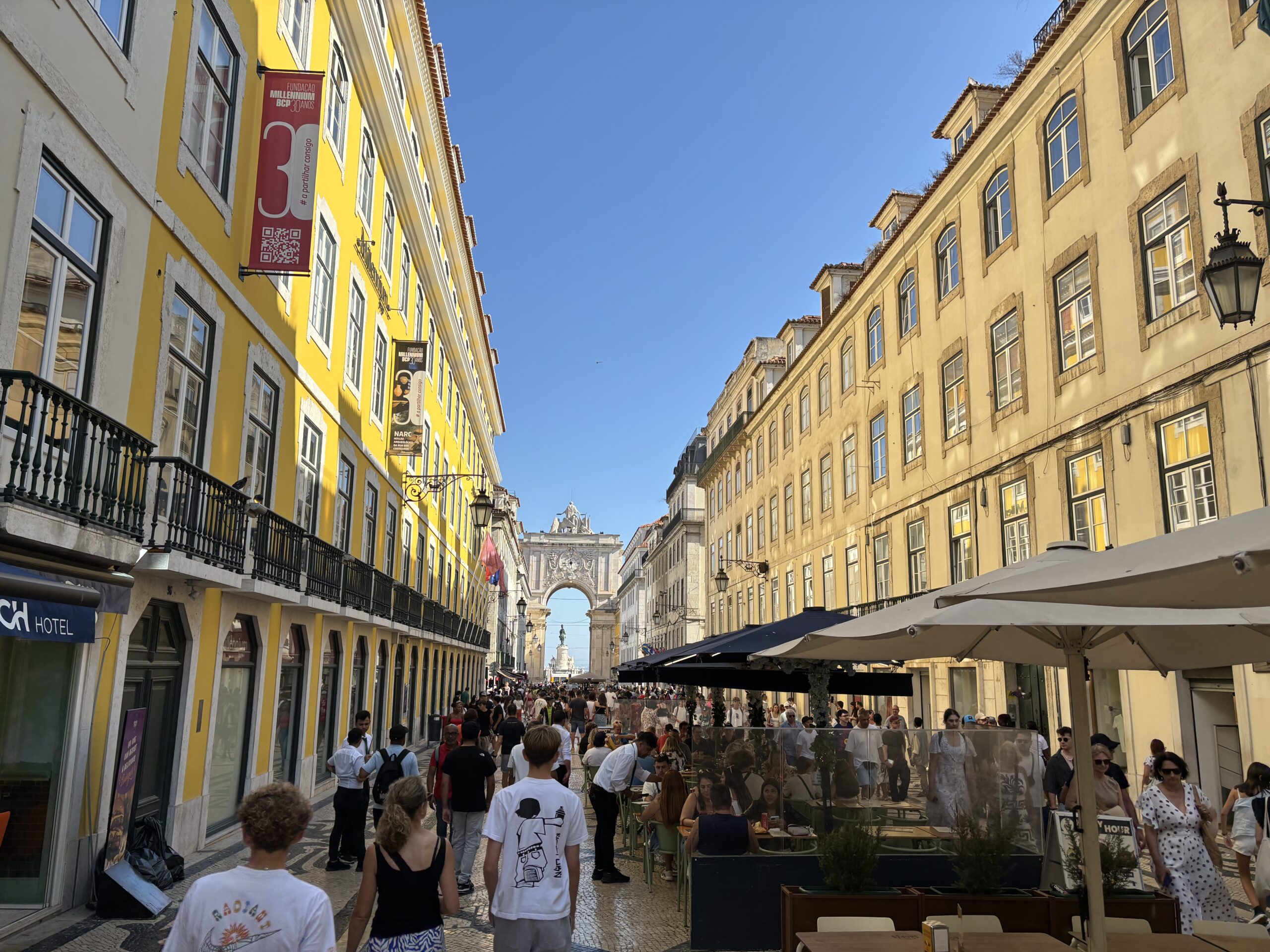

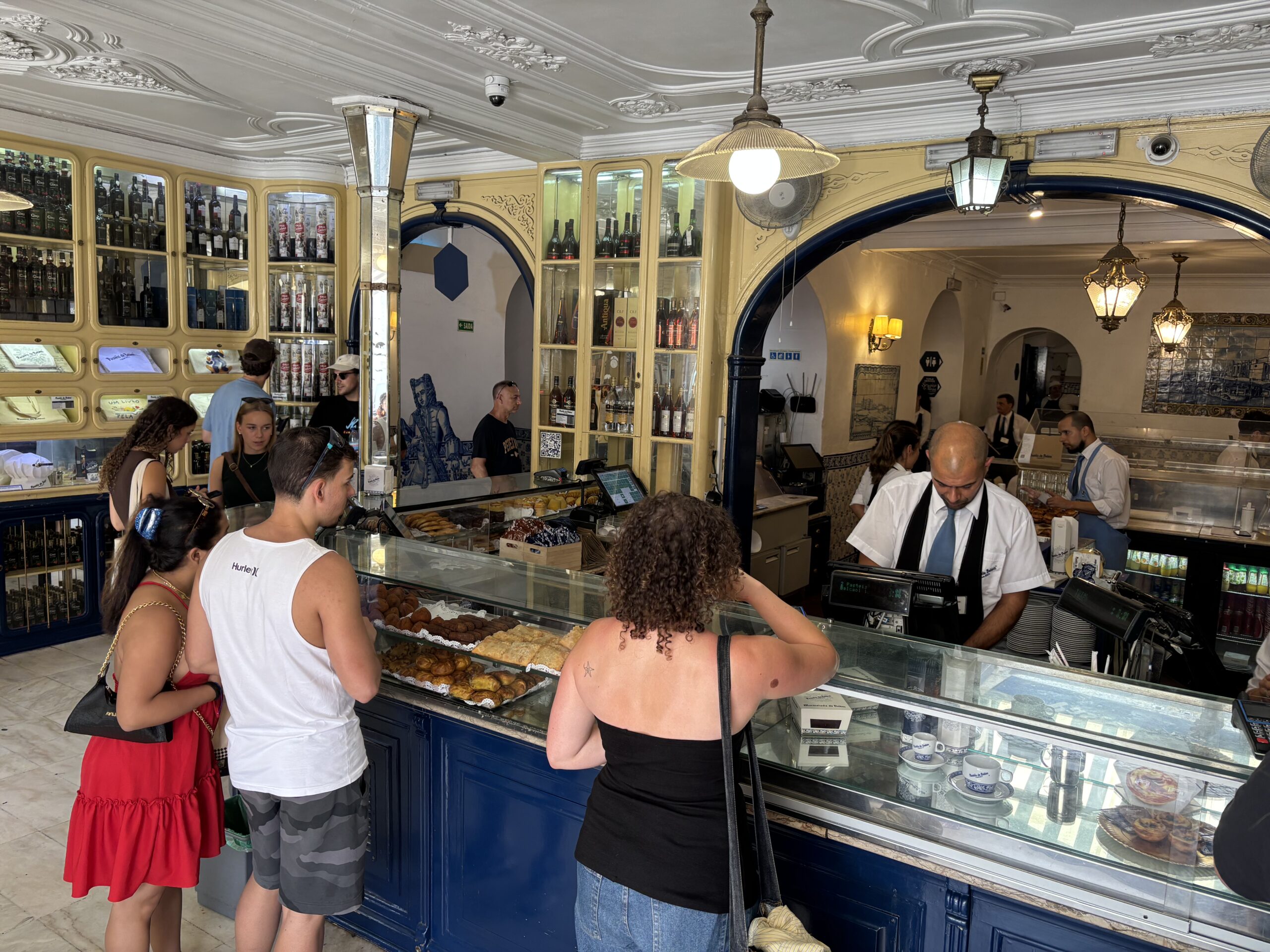
I’d anticipated that it would be a food-based holiday and I wasn’t disappointed. After dropping our bags off at the hotel we headed out to explore, almost immediately bumping into a little shop called Castro selling pastéis de nata. We insisted that we didn’t need a fancy cardboard carry case for our four pastries as they would have an estimated lifespan of sixty seconds after being handed over to us. So they popped them in individual little bags. They were delicious. Later on in our trip we stumbled across the original historic home of these pastries in Belém and ordered some more. They were good but — with apologies to their secret recipe — perhaps not quite as delicious as those we had on our first day.

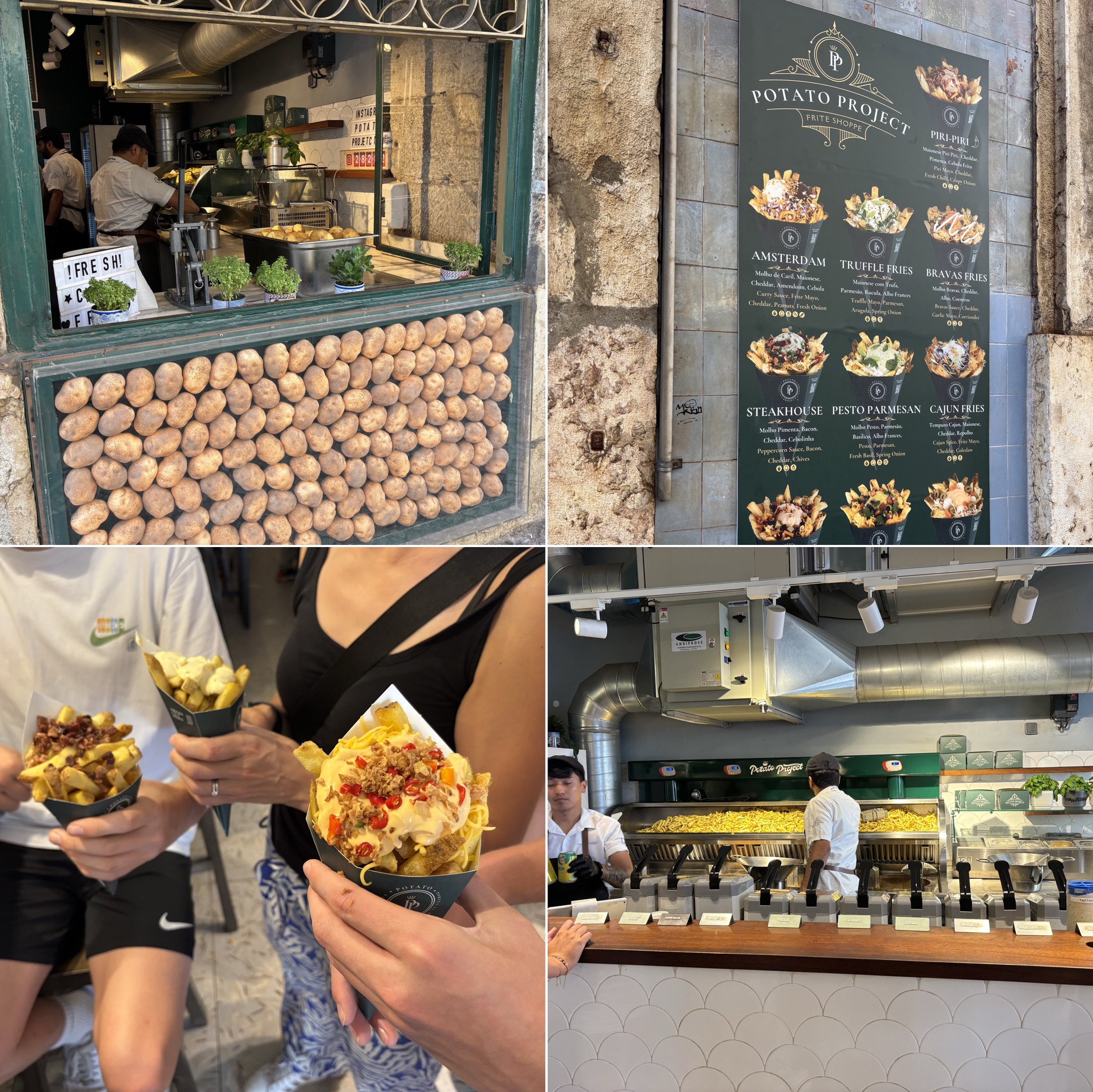
For a follow-up snack, one of the boys navigated us to The Potato Project, a small shop selling cones of deliciously cooked chips all dressed up with various toppings. We usually love mushy peas with our fries, but I could see a business like this doing a brilliant trade in the UK.
For dinner, we took a short walk to Restaurante O Chiado which had exceptional reviews on all of the websites we looked at. It was my kind of place, with only 20 seats in a little room with an authentic, rustic feel. After seeing a sizzling dish being brought to another customer’s table, we started with a plate of fried shrimp in olive oil and garlic to share, along with some bread to mop up the sauce. The tastes were incredible. For a main course, the boys both ordered ‘steak on a stone’, which according to one of our boys turned out to be “one of the top three meals I’ve ever had in my life”. After equipping them both with bibs, the raw steaks turned up alongside possibly some of the hottest objects ever known to man. They sat at the table, gently cooking their steaks until they were just how they liked them. My wife and I ordered the monkfish with rice and shrimp, which was also superb. We finished up with some small desserts and waddled back to our hotel, fully satisfied with a wonderful meal.


The boys spent some time mooching about on Lime e-scooters, and eventually persuaded my wife and I to join them. They ended up being a fun and practical way to get around the city; the breeze from travelling around at speed compensated for the 35°C heat.
They told us that they had seen people travelling around in groups in small electric cars run by Spinach Tours and thought it looked fun. We checked out their website and found that we could reserve two cars at a discounted ‘early morning’ rate for the next day for €160, so we booked ourselves in.

They took a very loose approach to verifying that we were safe to go out in the cars on the roads. Despite my youngest son only having passed his test in the past year, they only wanted to see two of our driving licences for insurance purposes. Not knowing quite what to expect, we paid a €15 insurance premium per car to limit any damage to a €600 excess for each. The lady who checked us in told us that “nobody has ever been hurt in our cars”, but followed it up by telling us that their worst accident was when someone drove one of the cars through the window of a shop. Everyone was fine, but the shop was not.
The cars were simple to operate, with motorbike-style controls including a ‘twist’ accelerator on the right-hand handlebar. There was a single pedal for the brake, and a rocker switch for the indicators that you had to deactivate manually. It took a little bit of getting used to, particularly when trying to do a hill start; you had to turn the accelerator, wait for three or four seconds and then release the brake. The other vehicles around us were mostly tolerant as we got used to them on the roads. Once we got used to them we found ourselves zipping along the faster roads at 45km/h.
Each car had an Android tablet in a magnetic case, which stuck onto the dashboard, showing you a map of where you are and where one of the various predetermined routes were. If you started driving along one of the routes, audio would kick in to act as your guide and tell you what you’re looking at. The app included suggested places to stop, get out of the car and look around, but in practice we found that everywhere was too busy for us to pull over and park up.
The biggest downside to the cars was how uncomfortable they were. We hired them for three hours but bailed out after two and a half. You couldn’t adjust the seats in any way. Both my butt and my leg were in agony from sitting in an awkward position, and I found myself taking my foot away from the brake pedal to stretch it out in the rest of the footwell as we went along. I couldn’t have driven one for much longer. It was fun, but I was glad to get out and get walking again.
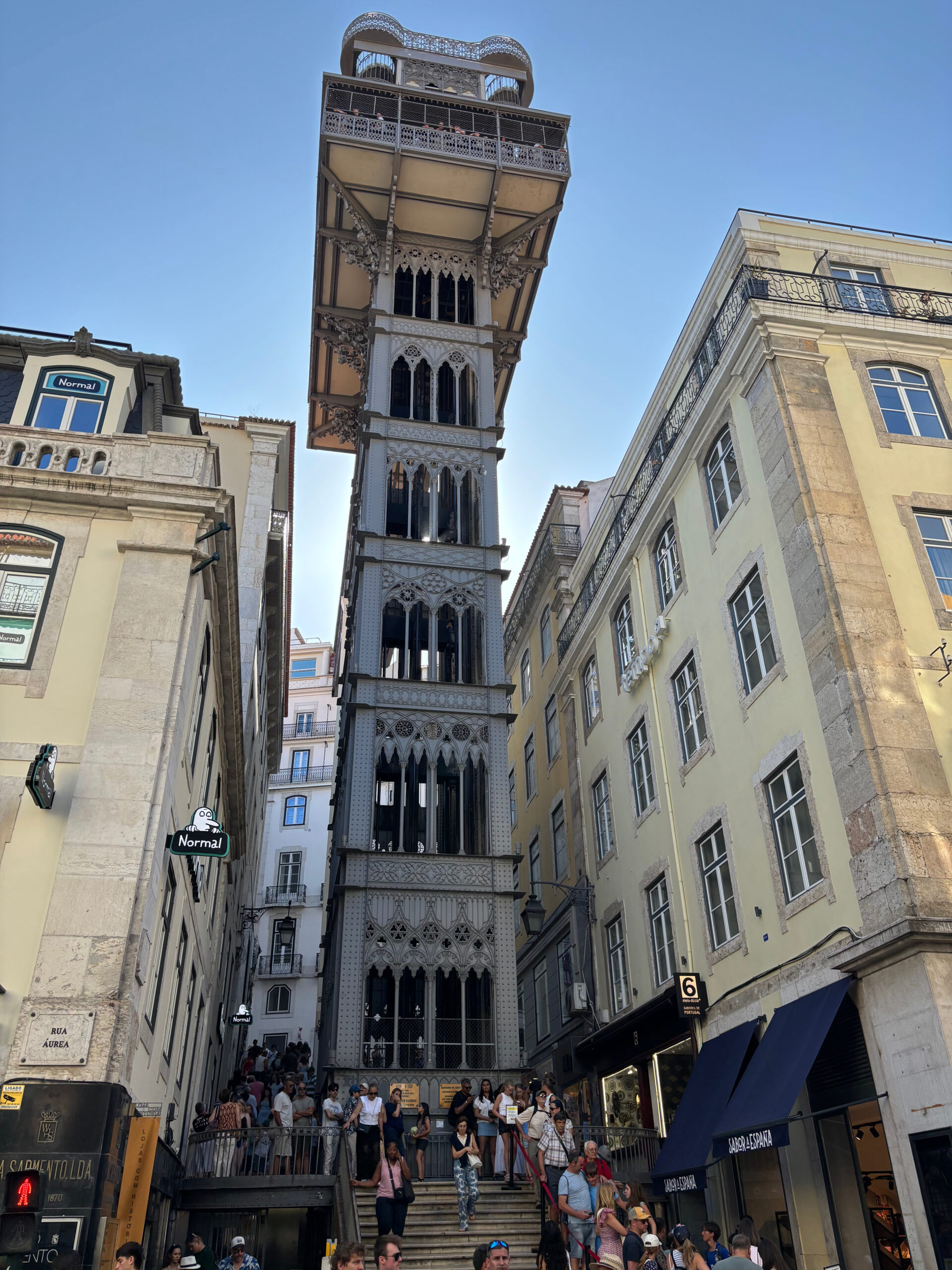
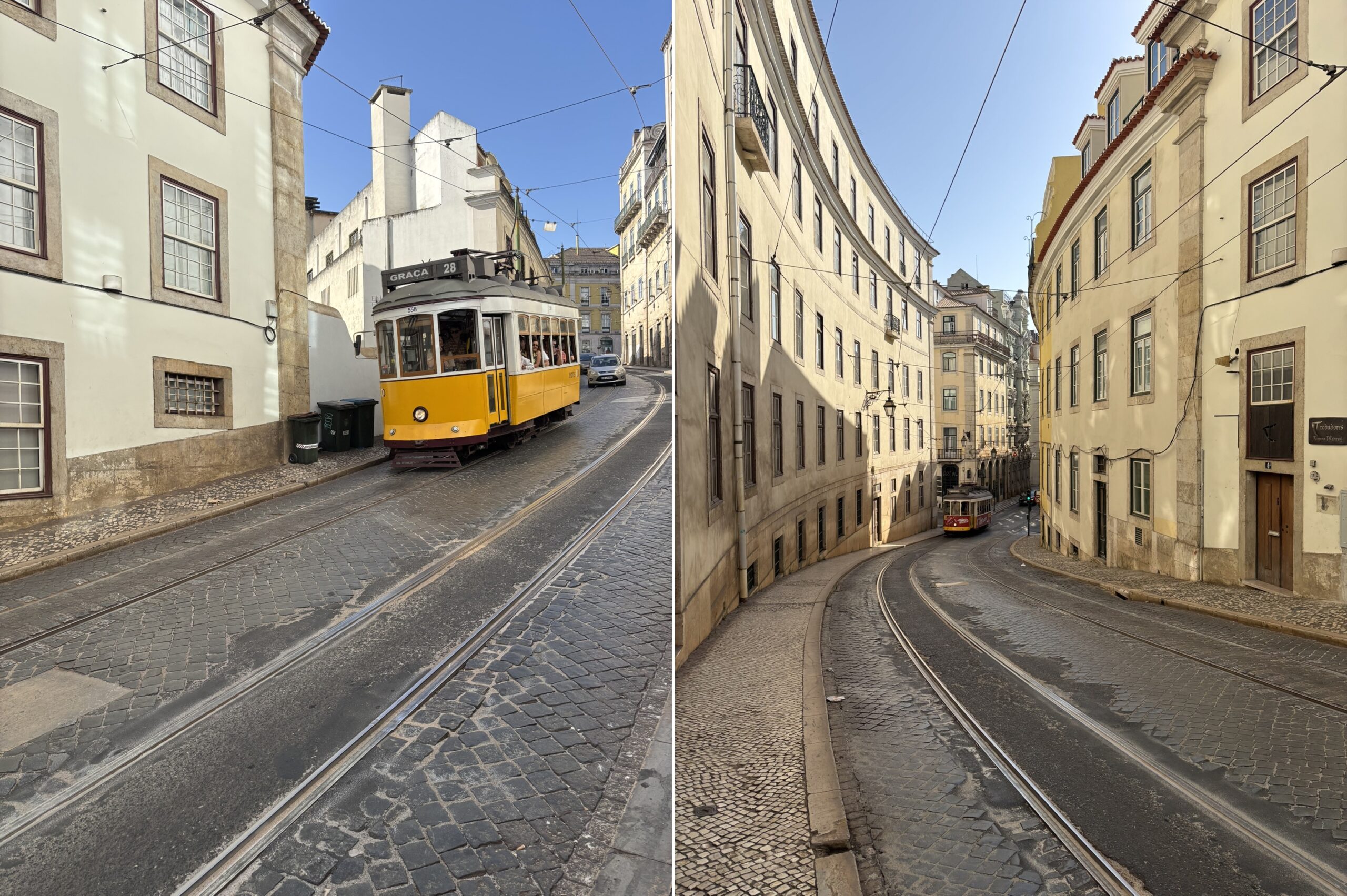
As you would expect from a capital city, there is lots to see in Lisbon and we barely scratched the surface in the three-and-a-bit days that we were there. The Santa Justa Lift was located very close to our hotel and we were more fascinated by the ever-present crowd of people paying to ride the elevator to the top than we were about the structure itself. Heavy trams rumbled everywhere, seemingly defying physics as they scaled the steep streets.
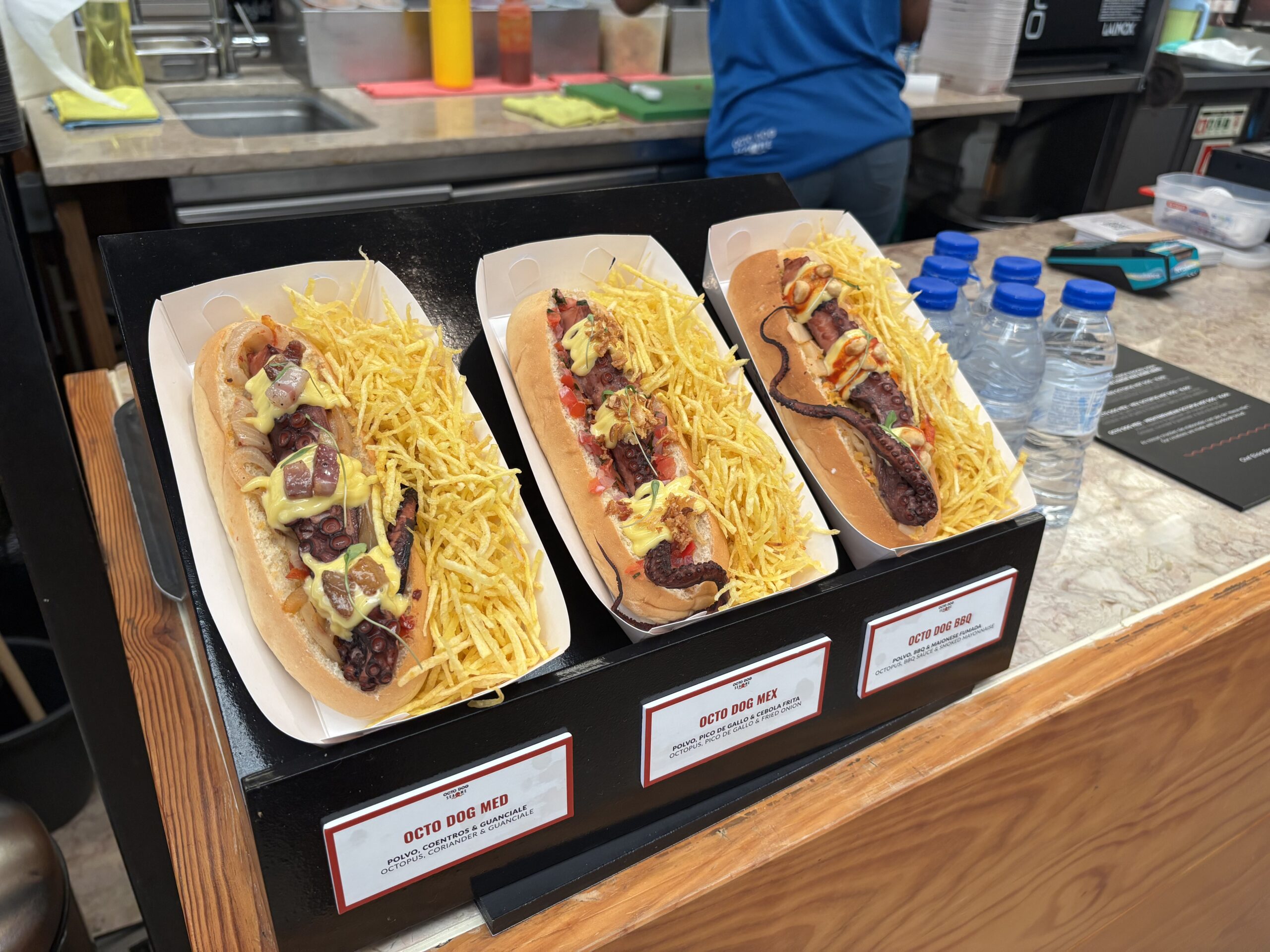
Our gastronomic journey continued with a visit to the Time Out Market, a big food hall with a host of independent vendors and communal seating. It was bustling with people. One of our boys impressed us with his desire to try something he’d never had before, going for an octopus hot dog with tiny fries.

We came across Crush Doughnuts close to our hotel and couldn’t resist stopping to sample them. The doughnuts are massive; even sharing two between four of us was more than enough.

It was fun to wander along to Lupita Pizzaria, a highly-rated pizza joint in a part of the city we hadn’t been to yet. We walked down Pink Street, past a bunch of funky small bars that looked geared to tourist crowds, as well as the smallest bar I’ve ever seen, which could literally be filled up as soon as you get four or five people in there. When we got to Lupita Pizzaria, we found a big crowd gathered around one of the doors and worried that we had arrived too late. We started thinking that maybe we should try elsewhere, but ultimately decided to stick with it. We gave our name to the lady at the door, who wrote it on a list on one of the glass door panels. We also found that she would serve us drinks from the door, allowing us to relax a bit while we waited for a table to come free. We struck up a great conversation in the queue with a guy from the US and his two sons who were holidaying there.
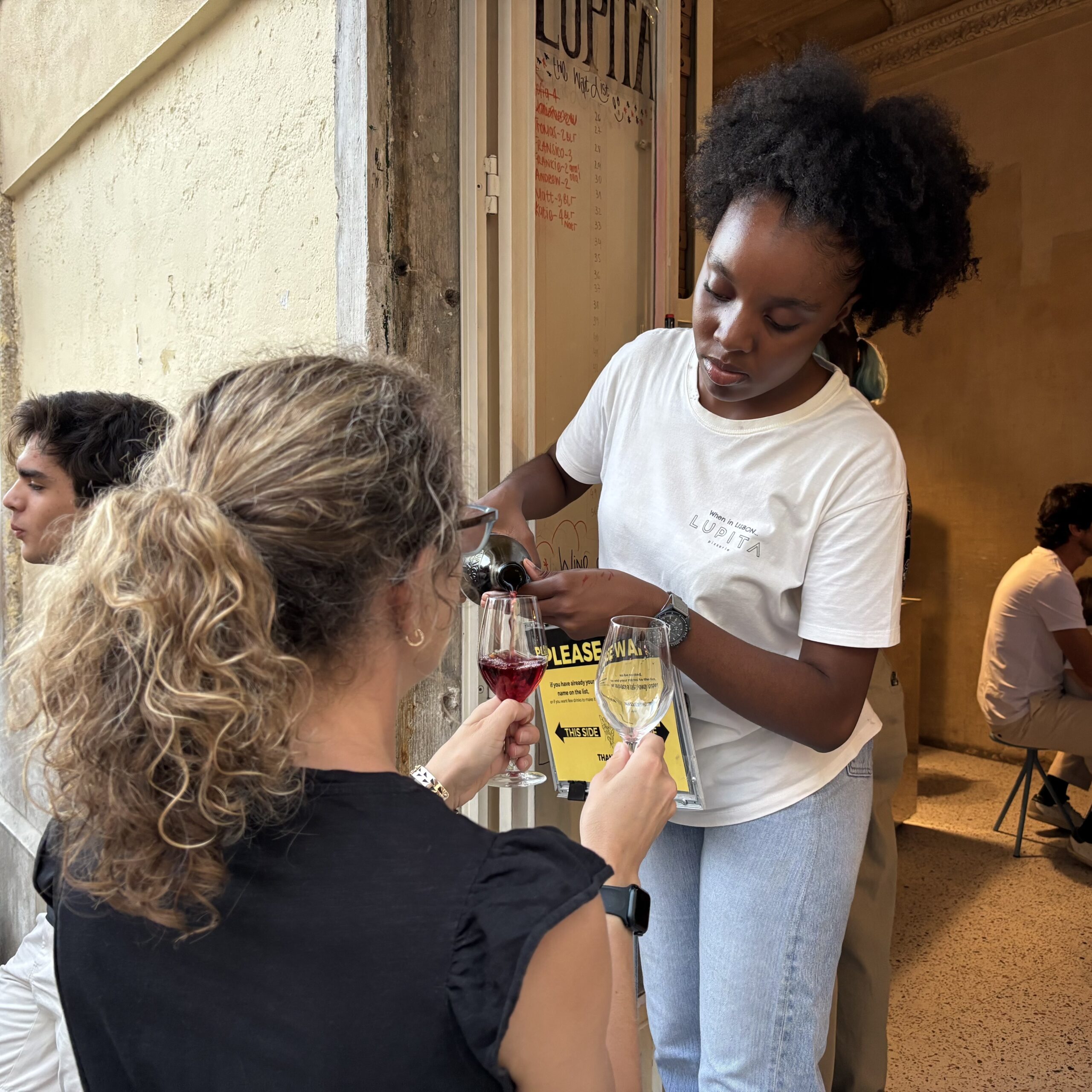
Once we eventually got into the restaurant, we understood why it took some time. The place was very small, with just a few seats at a handful of tables. The menu was extensive, and I was excited to try a vegan pizza with mushrooms while my wife opted for a pizza covered in shaved courgettes. They were delicious, but I couldn’t finish mine.

Breakfast is my favourite meal of the day. We managed to find some lovely places that sold all of the great breakfast things, from avocado toasts, to eggs, to açai bowls with granola. The Folks and Dear Breakfast were both excellent, but on our last day in the city we discovered Miolo, which was on another level. The décor was beautiful, with gorgeous, comfy seats and wallpaper which made a statement without being overwhelming. Someone with a very keen eye for interiors had gone to town on the place. But it wasn’t style over substance; the food was delicious.

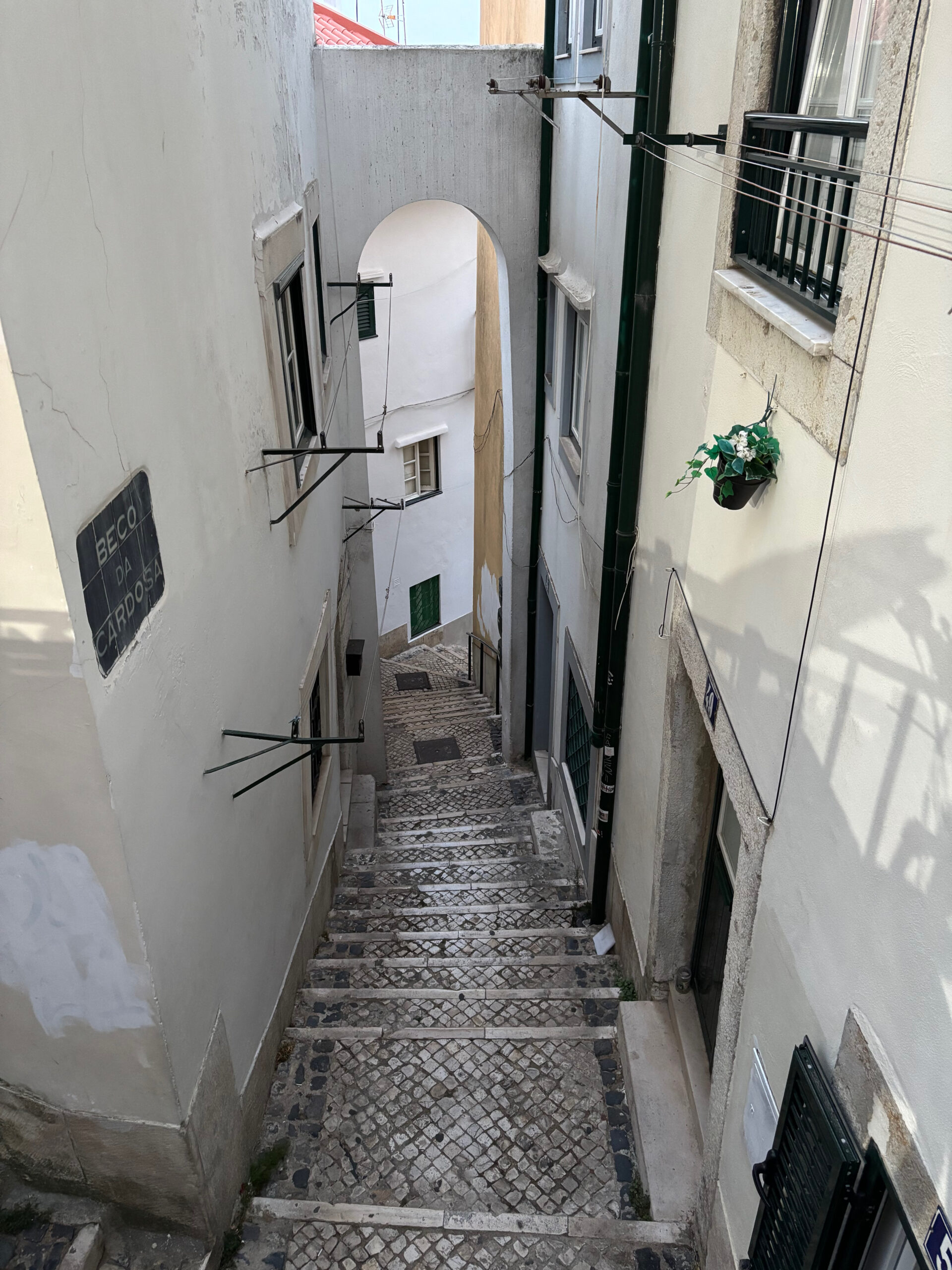
One evening we sought out pasta at Osteria Bellosguardo, an intimate Italian restaurant in the middle of a bunch of narrow, winding streets. The whole area around the restaurant had a wonderful rustic feel; old men with old, sleepy dogs sat on benches, chatting and watching people walk by. As we walked away after our meal we came across someone’s laundry airer placed in the middle of the street. When you don’t have any outside space, why not?


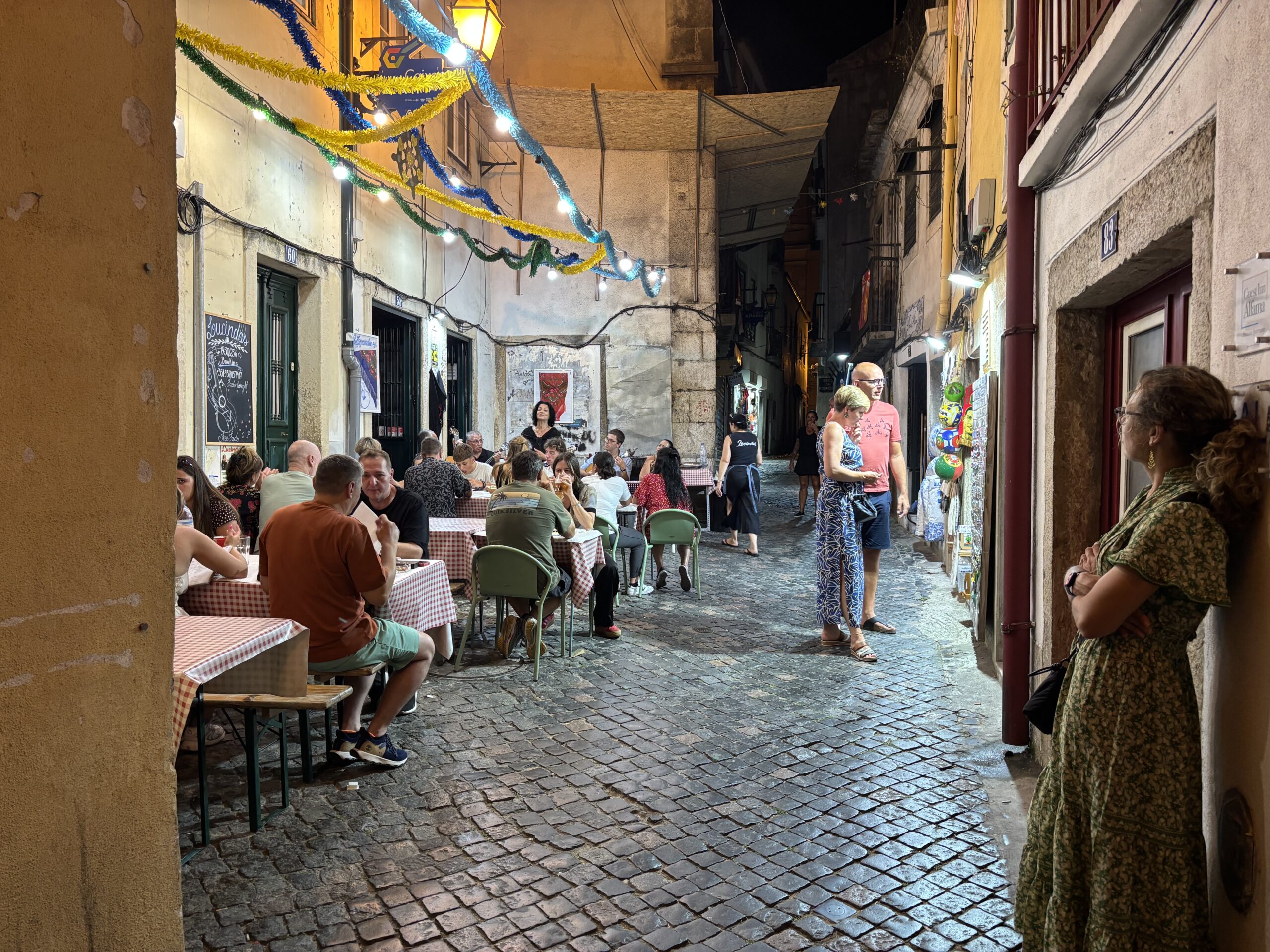
We could hear music and singing, and followed our ears to find out where it was coming from.

We came across an alfresco restaurant where all of the diners were being treated to a performance of fado, a form of traditional Portuguese music. I don’t know what the topic of the song was, but it sounded beautiful.
On Sunday we took the train for an hour out of the centre of Lisbon to Sintra, which many people had suggested we include on our itinerary. Unfortunately, when we got there, the many tourist touts told us that the historical sites had been closed by the authorities due to the risk of wildfires. Disappointing, but totally understandable. We quickly decided to get a taxi to Cascais, a local seaside town. It was pretty, but we weren’t really beach ready and after a little bit of wandering around we decided to head back on the train.

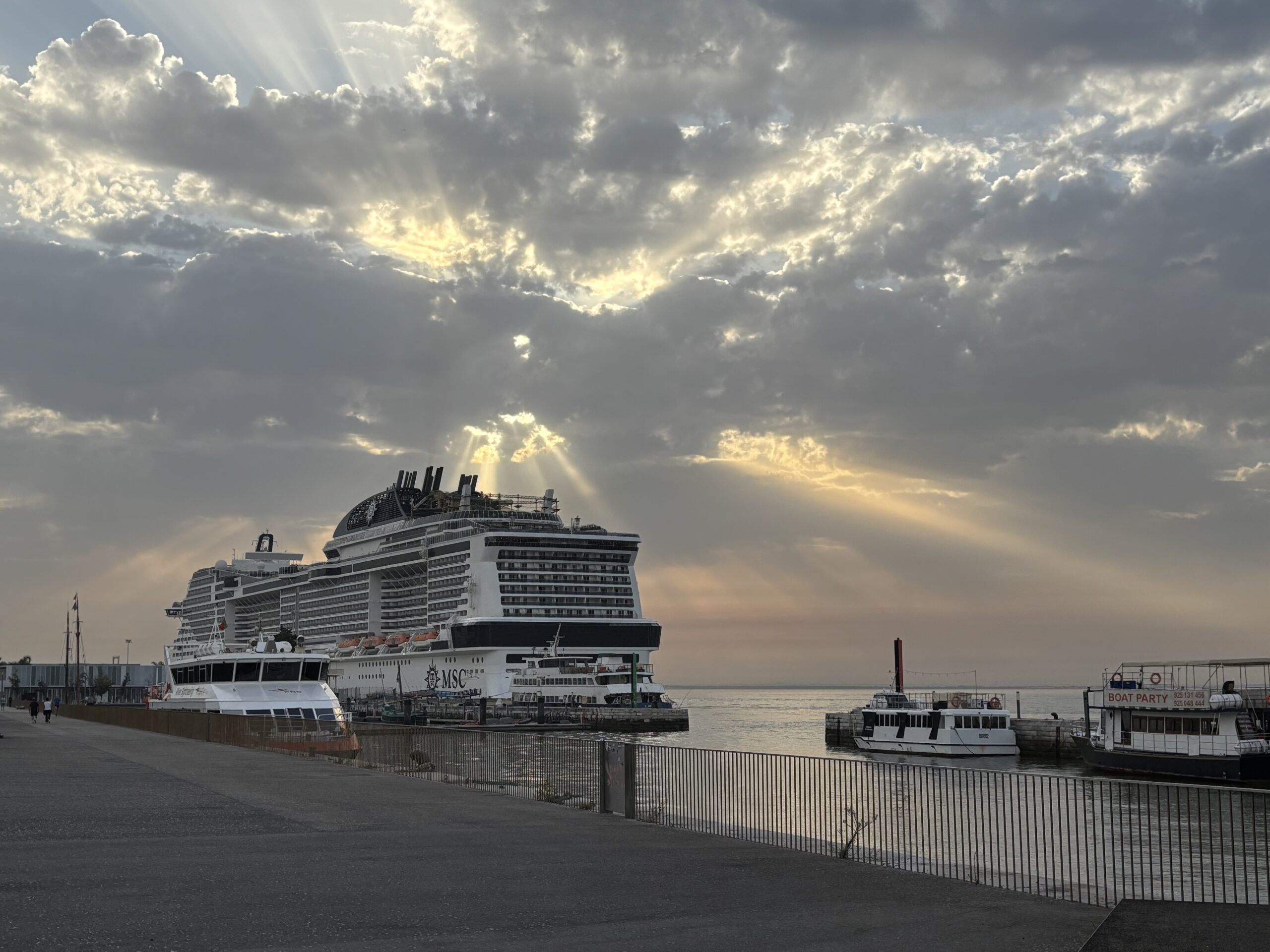
We managed to get some runs in, heading down to the water and along the waterfront. The first day we headed west and found ourselves heading along narrow pavements in an industrial landscape. For my second run I went the other way along the river, and was greeted by a port hosting gigantic cruise ships. It’s hard to understand the size and scale of them until you are up close.
Some of the trauma of the 1755 calamity has been channelled into the creation of the Quake Lisbon Earthquake Museum. The reviews were good and we thought that it would be a great way to learn a bit more about the history of the city. It was less of a museum and more of an interactive experience, with a simulated trip back in time to 1755, and strict timings between each of the scenes that you visit. For the earthquake itself, you find yourself sitting on wooden pews in a cathedral, watching the start of a religious service before the shaking starts and causes havoc. We learned that Prime Minister at the time, Sebastião José de Carvalho e Melo, 1st Marquis of Pombal, led the reconstruction efforts which included the world’s first buildings to incorporate an anti-seismic design. Looking through my photos, I realised that we had already encountered the Marquis of Pombal on our trip — painted tiles in Restaurante O Chiado showed him proud of his work of rebuilding the city.

I found the Quake experience a little lacking, particularly for the entrance fee. Although there was plenty of information available in the different rooms, it felt as though it had been dumbed down in order to make it more of an ‘experience’.
Louie Louie record shop was a good find, with its unassuming entrance off some steps down a side street. They had a great selection of music, all reasonably priced. I picked up three second-hand CDs — Salad’s Drink Me, New Young Pony Club’s Fantastic Playroom and Turin Brakes’ Ether Song — for €5 each.
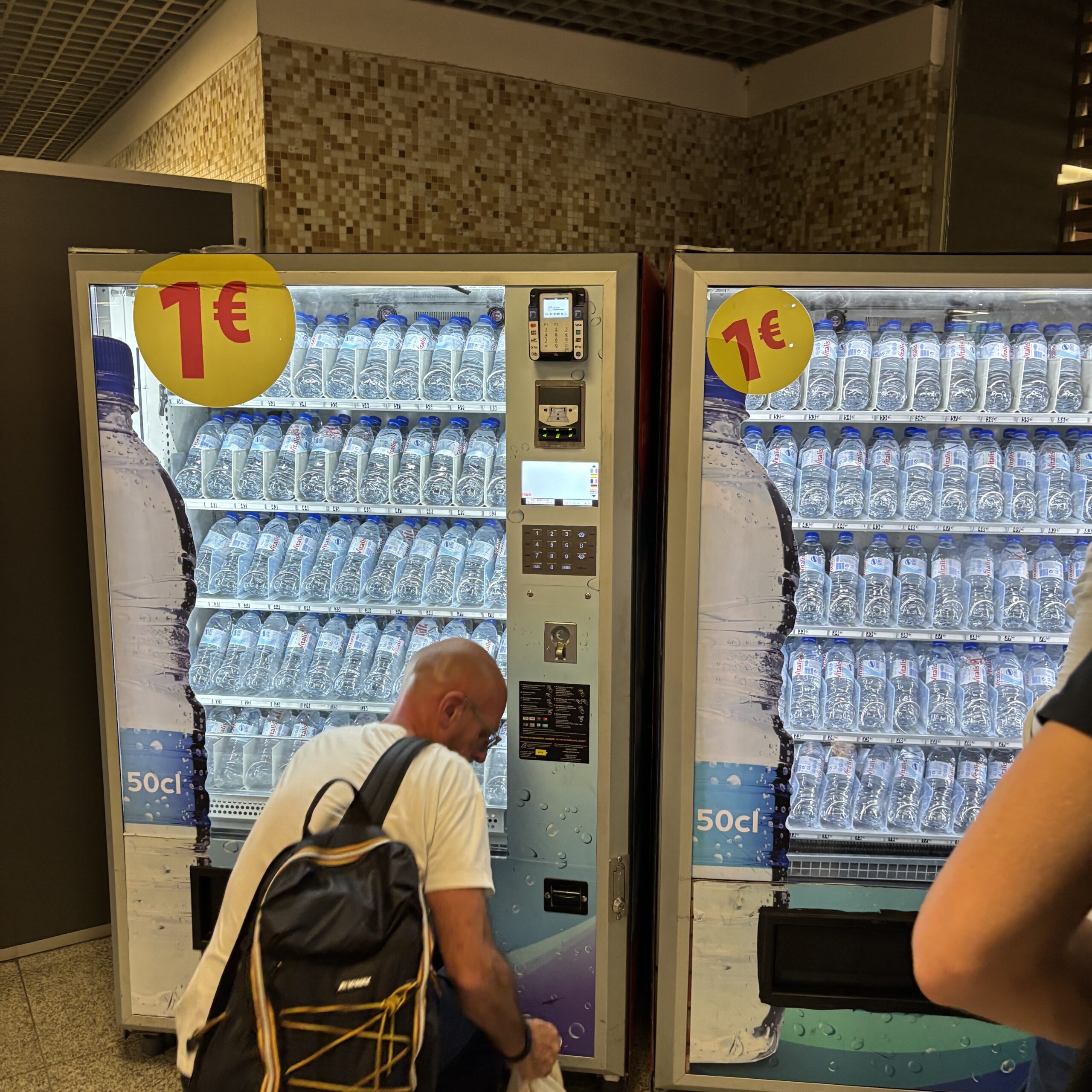
And just like that, our short holiday was over. Lisbon had one final surprise for us; straight after security at the airport, there were two conveniently located vending machines selling bottles of water for the retro price of €1. What a splendid touch.
It was so lovely to spend time together as a family, particularly given that one of our team is about to set off on his own university adventure and won’t be at home as much. Lisbon was fabulous, and I’d definitely like to come back.
Porto is good as well btw